Call us Mon-Thu 8:30-5, Fri 8:30-2801-566-1867
Koala-Tees Inc - Quality Apparel since 1983Koala-Tees
Full-color apparel decoration

DTF & DTG printing in Salt Lake City, Utah

Both methods handle detailed, full-color designs and are often a great fit for smaller orders - they skip much of the screen-printing setup. They apply the image differently, so fabric, feel, artwork, quantity, and durability guide the choice.

Rather compare for yourself? Read the four-method comparison guide - real photos and video from our floor.

Colorful direct-to-film transfer printing
DTF

Direct-to-film transfers

The design is printed onto film and heat-applied to the garment. DTF works well for full-color artwork, detailed designs, smaller quantities, and many garment types - and because it’s transferred, it works across a wider range of fabrics than DTG.

For custom heat transfers or gang-sheet projects, send artwork dimensions, quantity, fabric, and whether you need finished garments or just transfers, so we can quote it accurately.

Detailed direct-to-garment apparel print
DTG

Direct-to-garment printing

The design is printed directly into the fabric, usually on cotton or cotton-rich garments. DTG is great for lower quantities and detailed, full-color artwork, and can have a soft hand feel on the right fabric.

Garment material matters: a shirt that suits DTG may differ from one that suits DTF. We review the intended garment instead of treating the methods as interchangeable.

How it’s made

From your file to a finished shirt

Both methods start the same way - your artwork as a print-ready file, sized and placed for the garment. Where they split is what the ink lands on and how it gets cured, and that difference decides almost everything else about the finished piece.

DTG, step by step

Printed into the shirt on our Brother GTX Pro.

  1. 1Your order is pulled, and the garments are pretreated - that step is what lets the ink bond properly to the fabric. A few blanks skip it entirely: the Port & Company PC54DTG ships pretreated from the mill, so it goes straight to the printer.
  2. 2Artwork is prepped and loaded into the printer's RIP software, sized and positioned for the garment.
  3. 3Shirts are loaded onto the printer and printed one at a time, with the ink applied directly to the garment. The underbase lays down first, then the colors print on top of it.
  4. 4The print is cured - through the conveyor dryer or under a heat press - so the ink is locked in.
  5. 5The order is stacked, folded, and bagged or boxed, ready for pickup or shipping.

DTF, step by step

Printed and cured on film, then bonded to the garment.

  1. 1Artwork is prepped and loaded into the RIP software. On transfer runs, several designs can be ganged onto one sheet.
  2. 2The design prints onto film rather than onto the shirt.
  3. 3Powdered adhesive is applied to the fresh print.
  4. 4The sheet runs through a dryer that cures the ink and the powder together.
  5. 5Shirts are pulled and staged, and a heat press bonds the transfer to the garment - which is why DTF reaches fabrics DTG will not.
  6. 6We press again with a special sheet that noticeably reduces the plastic feel DTF is known for and makes the transfer sit better on the shirt. Some hand feel is always there - we would rather tell you that up front than have you find out at delivery.
  7. 7The order is stacked, folded, and bagged or boxed.

Off our printers

Real DTG & DTF jobs we've printed

Not stock photos - actual customer orders on our own machines in Sandy.

Large photoreal grayscale koala portrait printed on a black t-shirt, loaded on the platen of a Brother GTX Pro DTG printer

DTG · oversize photoreal

A big, detailed koala portrait printed on a black tee - nearly the full front, straight off our Brother GTX Pro. Fine grayscale fur on a dark garment is exactly what direct-to-garment does best, and this one runs right up to our oversize print area.

DTG · photoreal detail

A Draper group headed to Lake Powell wanted a photoreal fish-and-lure scene. We ran it on the DTG printer with the black knocked out of the art - the detail pops and the print stays soft on a black tee.

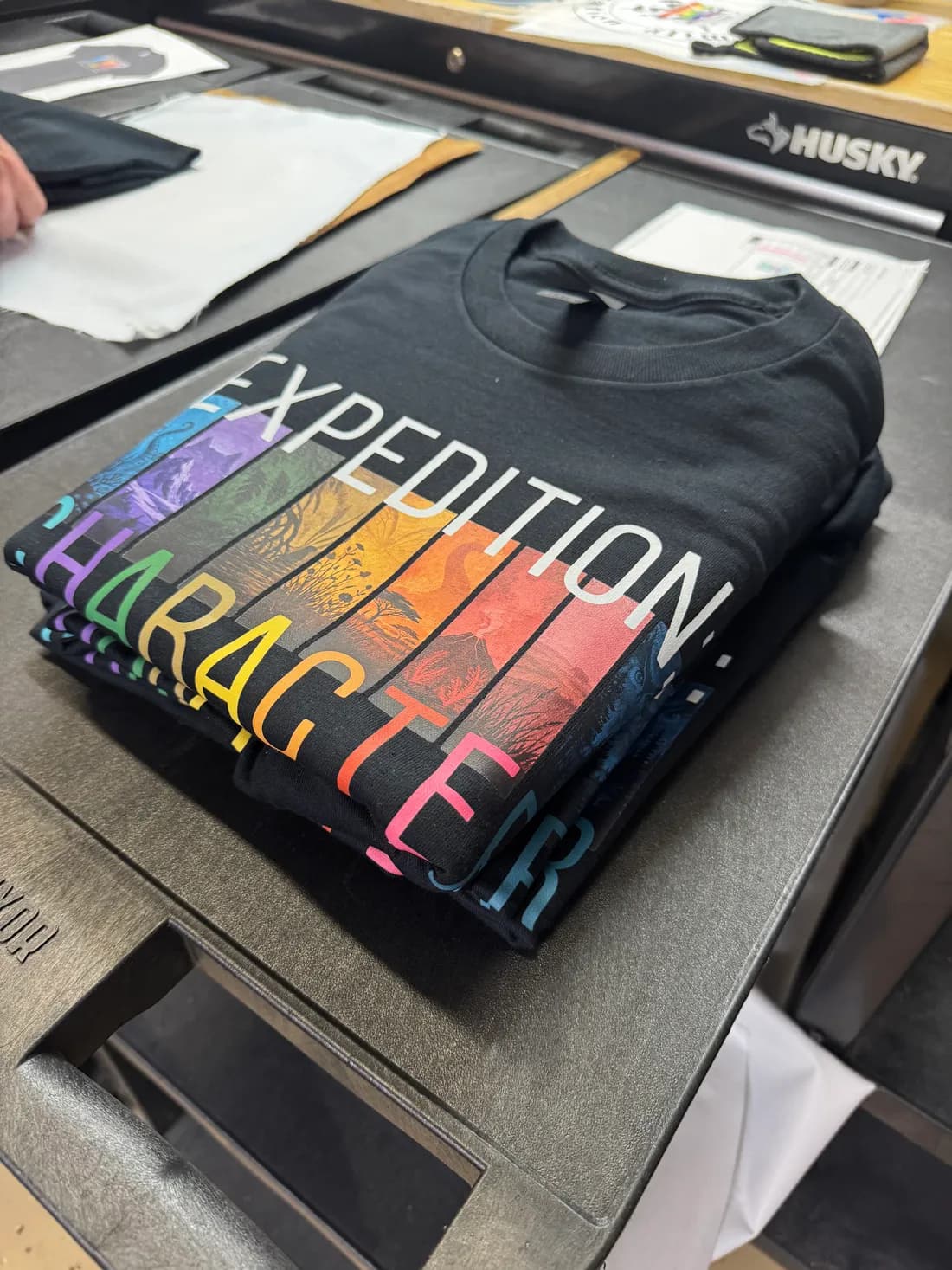
Stack of black Gildan 5000 tees with a full-color Expedition Character DTF print on the front

DTF · full color

Full-color DTF prints, still warm off the press, on a stack of black Gildan 5000s.

DTG · on the printer

Shirts for the orchestra program at Canyon View Elementary in Cottonwood Heights - here's one printing direct-to-garment on our Brother GTX Pro.

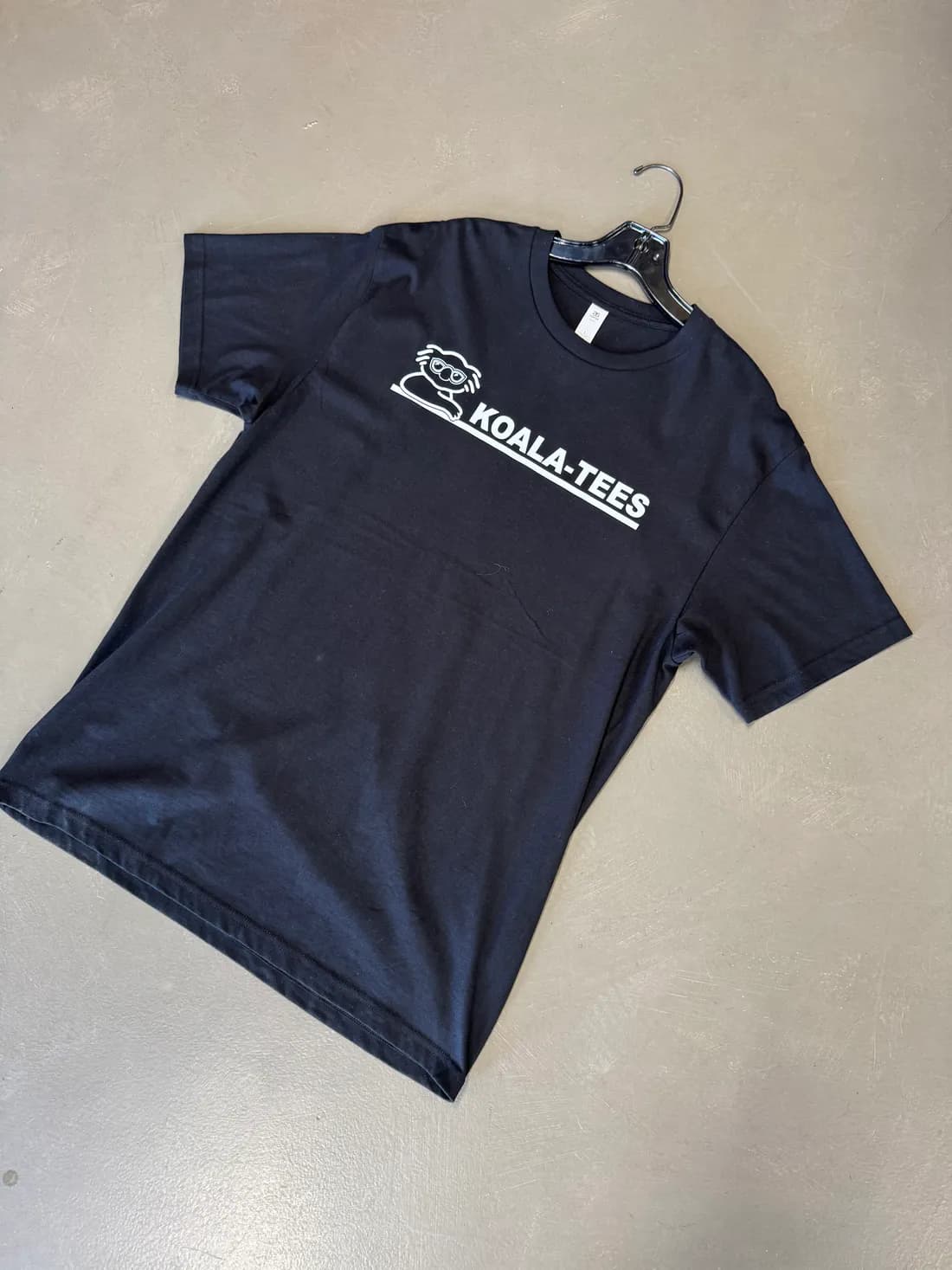
Black AS Colour 5050 Block Tee with a white DTF Koala-Tees logo print on the chest

DTF · one-color crisp

We put our own logo on this one - white DTF on a black AS Colour 5050. When we pick a premium blank for ourselves, this is it.

DTF vs. DTG

How to decide between them

Weighing these against screen printing or embroidery too? See the full four-method comparison guide.

Start with fabric

DTF can suit more fabric types; DTG is usually used on cotton or cotton-rich garments.

Consider the finish

DTF is heat-applied on top of the fabric. DTG prints into the garment and can feel softer on suitable cotton.

Share the whole job

Artwork detail, quantity, garment, feel, and durability goals all shape the recommendation.

FactorDTFDTG
How it's appliedPrinted onto film, then heat-pressed onto the garment.Printed directly into the fabric with garment-printing ink.
Fabric rangeWorks across a wider range of fabrics and blends.Best on cotton or cotton-rich garments.
Feel on the garmentSits on top of the fabric as a transfer.Can have a softer hand on the right cotton garment.
Detail & colorFull-color, photo-detail artwork - fine lines stay crisp on the film across any compatible fabric.Full-color, photo-detail artwork - printed into the fabric, so very fine detail depends on a smooth cotton surface.
Typical order sizeSmall runs, one-offs, and gang-sheet transfer runs.Small runs and one-offs on qualifying cotton garments.

DTF/DTG, screen printing, or embroidery?

Each method has a job it does best. Here’s how the printed methods compare to the others.

DTF/DTG vs. screen printing

Screen printing is usually the stronger fit for larger quantities, repeat orders, and bold, simpler designs - setup cost spreads across more pieces. DTF and DTG skip most of that setup, so they shine for smaller runs or highly detailed, full-color art.

See screen printing

DTF/DTG vs. embroidery

Embroidery is stitched, not printed, so it suits hats, polos, jackets, and uniforms where a durable, textured logo is the goal. DTF and DTG are printed methods for full-color, photo-detail artwork on shirts and similar garments.

See embroidery

Garments & placement

What each method wants on the garment side

The single fastest way to narrow this down is to tell us the blank. Fabric decides more here than artwork does, and it is the first thing we ask about when someone is torn between the two.

What DTG wants

Cotton, and the more of it the better. Ring-spun cotton gives the smoothest surface and prints the cleanest. There are tricks for blends and we pull them off occasionally when a customer asks, but on most blend and polyester jobs DTF is simply the better tool.

What DTF reaches

A wider spread of fabrics - cotton, blends, and polyester - which is what makes it the answer for mixed garment orders where one design has to land on several different shirt types. DTF prints also stretch with the fabric rather than fighting it.

Size & placement

Left chest, standard full front, back, sleeve - each location is its own pass through the process, so tell us every spot you want decorated. Genuinely oversized DTG prints are possible on qualifying garments and designs - our platen prints up to 16 inches wide by 21 inches tall - and artwork dimensions, the size range you are ordering, and the print location all factor in.

Not sure which blank you want yet? Browse custom t-shirts or hoodies and sweatshirts, and we will confirm DTG or DTF against whatever you land on.

Artwork

What to send us, and what we do with it

Digital printing skips the color separations screen printing needs, but file quality still shows up in the finished shirt. These printers reproduce what you give them faithfully, including the parts you were hoping nobody would notice.

Best files to send

Vector AI, EPS, or PDF for logos and clean graphics. Our quote form also takes PNG, JPG, GIF, WebP, PSD, TIFF, and HEIC. For security reasons the form does not accept SVG uploads - export SVG art to PDF or AI first, or send it over and we will help convert it.

If the file is rough

Blurry logos, low-resolution screenshots, and files pulled off a website usually need cleanup before they will print well. We can often prepare artwork for production; a full redraw takes more time and may carry a cost, and we tell you which one you are looking at before anything moves.

Knockouts on dark garments

On a black or dark shirt, artwork that contains black often prints better with that black knocked out of the file so the garment itself becomes the shadow. That is exactly how we ran the Lake Powell design above, and it is why the detail reads the way it does.

Nothing prints unapproved

You approve a proof or mockup before production starts, so placement, sizing, and layout are settled while they are still easy to change.

Color, honestly

How close we can get - and where we stop

Our digital printers build color from CMYK. That covers an enormous range, and on a difficult brand color we will tune the printer’s color settings to land remarkably close rather than shrugging and printing whatever comes out of the file. Garment color plays into it too: the same ink reads differently on white cotton than it does on a dark blank.

True neon is the one we cannot fake. Fluorescent color lives outside what four inks can mix, so when a job needs real neon we move it to screen printing, where we mix Pantone colors with fluorescent additives on the bench. Reflective, metallic, and puff finishes are the same story - those are modified inks, not printed images, so they belong on the press rather than the printer.

We would rather route your job to the right machine than sell you the wrong one. If your artwork leans on a color we should talk about, say so early and we will tell you straight which method gets you there. The full breakdown of that trade-off lives in our digital printing cost guide and our screen printing cost guide.

FAQ

Common questions about DTF & DTG orders

Is there a minimum order for DTF or DTG printing?

No minimum on garments ordered through us - digital printing is exactly how a single shirt or a handful of shirts makes sense, because there is no per-color screen setup behind it. Method choice runs both ways, too: we default to quoting whichever method is the best value for your job, but if you specifically want DTG, DTF, or screen printing, just ask and we'll quote it that way. For what actually moves the number, read our digital printing cost guide.

Can I order DTF transfers without the garments?

Tell us and we will quote it. For transfer or gang-sheet projects, send artwork dimensions, quantity, the fabric they are going on, and whether you want finished garments or just the transfers.

How should I wash a DTF or DTG printed shirt?

Inside out, cold water, no bleach or harsh chemicals, and tumble dry low or hang dry. High heat is what shortens the life of most apparel decoration, so the dryer setting matters more than people expect.

How long will a digital print last?

We have DTF and DTG shirts that have gone through dozens and dozens of washes. Any decorated garment shows wear eventually - fabric, ink, wash settings, and how hard the shirt gets worn all play into it. Gentle, inside-out, cold, hang dry buys the most life out of any method.

How fast can a digitally printed order be ready?

Because there are no screens to burn, digital jobs start quickly. Qualifying orders placed online can select guaranteed rush turnarounds as fast as 3 business days at checkout - see our turnaround times page for the full picture, or call us if your deadline is tighter than that.

Can you print over pockets, zippers, or seams?

Our DTG printer runs right over pockets, zippers, and seams - the ink lays directly into the fabric, so hardware doesn't stop it the way it stops a screen. Screen printing is the pickier method there, and its cleanest result stays off the hardware. Any design that crosses a zipper, pocket, or thick seam gets reviewed and approved before we run it, so send it over and we'll show you exactly how it will land on your garment.

Can one order mix digital printing with screen printing or embroidery?

Yes, and it happens often. Everything runs in our Sandy shop, so one job can carry your logo across methods. We have even mixed methods on the same shirt - matching DTF ink colors to a screen printed design so every tee in the run could carry its own individual number on top.

More questions? See the full FAQ or give us a call.

Where DTF & DTG fit best

Small runs & one-offs

A single shirt, a handful of pieces, or a short run where screen printing's setup wouldn't make sense.

Full-color, photo-detail art

Gradients, photographs, and multi-color designs that would need many screens to print traditionally.

Mixed garments & fabrics

Projects using different fabric types where DTF's wider fabric range helps; we'll confirm DTG vs. DTF for your garment.

Proofs, quotes & nearby service

Send artwork, quantity, garment styles and colors, size breakdown, print locations, and your deadline. Pricing depends on garment cost, quantity, locations, artwork prep, method, and turnaround - curious what's behind the numbers? Read our digital printing cost guide. You approve a proof before we print. Serving Salt Lake City, South Jordan, West Jordan, and the Wasatch Front.

Full color, small runs, fast.

Upload your art and start an order, or send it over and we’ll recommend DTF or DTG.