
Pricing guide
How much does digital printing cost?
The short honest answer: digital printing's economics are the mirror image of screen printing's. There are no screens to burn and often no setup at all, so one shirt makes sense - a single digitally printed shirt usually lands in the neighborhood of $20-40 - and the price per shirt stays fairly flat as quantity grows. This guide covers what actually moves a DTG or DTF quote, when digital beats screen printing (it's not always about quantity), and the honest limits where it doesn't.
Written from the production floor at Koala-Tees in Sandy, Utah · Reviewed by the production team · Updated July 2026
Get your real number in about 60 seconds
This quoter runs on the same pricing grids we use at the counter, for both digital printing and screen printing, and it automatically quotes whichever method prices better for your exact job. Pick your shirts, colors, and quantity and the price builds as you go. Treat it as a very close estimate rather than a final quote - garment prices move, the tool can briefly lag a counter update, and we always confirm your number before anything prints.
One honest caveat: the quoter covers standard tee orders. Oversized prints, tricky color matching, unusual garments, and multi-process jobs need a human - request a quote or call 801-566-1867 and we'll price it properly.
What actually drives a digital printing quote
Six levers - and notice how few of them actually move much. That's the whole personality of digital printing.
Quantity (until it shelves)
Adding pieces does bring the per-shirt price down - there's still setup behind every job, and it spreads like any setup does. But the curve flattens fast. Past a certain quantity it's basically a shelf, and more pieces stop buying you much. That's the opposite of screen printing, and it's exactly why small orders are where digital shines.
Color count (it doesn't)
The twist that surprises people: a full-color photograph costs the same to print as a one-color logo. There are no screens to add per color, so color count simply isn't a lever the way it is in screen printing.
The garment
Same as any method - the shirt itself is a real slice of the total, and DTG adds a wrinkle: it does its best work on cotton and cotton-rich garments, while DTF ranges across more fabrics.
Print size (only when oversized)
Standard sizes price the same at Koala-Tees - a left chest and a standard full front cost you the same thing. It's when a print goes genuinely oversized that we add for it.
Print locations
Front plus back plus sleeve means separate passes, whichever method prints them - each location adds real production time.
Setup & artwork prep
On many orders setup is effectively zero dollars - print-ready art goes straight to the press. But setup isn't only artwork: it's pulling and staging the garments and loading your file into the printer's RIP software too. Some jobs also need cleanup or color knockouts first - still a far simpler process than screen printing separations in most cases.
When digital beats screen printing - and it's not always about quantity
The textbook rule says digital printing wins under about a dozen pieces and screen printing takes over somewhere between 12 and 36. That rule is real - it's the backbone of our screen printing cost guide - but it's not set in stone.
There are jobs at 50 pieces, sometimes even 100, where digital is genuinely the smarter call: artwork with special requirements the customer needs met exactly, more colors than the press can reasonably slot, or a week when screen printing production is running heavy and the digital printers can start your job today. The economics flex with the real world.
That's why we don't make you guess. The instant quoter above runs your job through both pricing grids and quotes whichever prices better - and when the answer is closer than the math shows, a real person weighs in before anything prints.
The honest limits
What digital printing can't do (yet)
Our digital printers - like most in the industry - print in CMYK. That covers an enormous range of color, and we can customize the printer's color settings to land remarkably close to an intended color, even difficult ones. But true neons are the honest limiting factor for us: fluorescent color lives outside what CMYK can build from its four inks. (Some digital printers do run fluorescent ink sets - ours don't.)
When a job needs real neon, we turn to screen printing - we mix Pantone colors on the bench using fluorescent additives, and the press lays that exact ink down. Screen printing can also go places digital simply can't: reflective inks, metallics, puff, and other specialty finishes are mixed or modified inks, not printed images.
And at real volume, screen printing still wins on price - that story, including the $600 t-shirt we'll never sell you, is told in the screen printing cost guide.
DTG vs DTF: same price drivers, different shirt in your hands
DTG - printed into the shirt
Direct-to-garment prints ink straight into the fabric, then cures through the conveyor dryer or under a heat press. On cotton and cotton-rich garments the result feels soft because the ink becomes part of the shirt rather than sitting on it.

DTF - printed on film, pressed on
Direct-to-film prints and cures the design on a film first, then a heat press bonds it to the shirt - which is why DTF ranges across more fabric types than DTG. We apply it with a special sheet that noticeably reduces the plastic feel DTF is known for. Some hand will always be there - honestly, it's not bad, and any method feels similar on a large solid patch; screen printing and DTG just show it less.
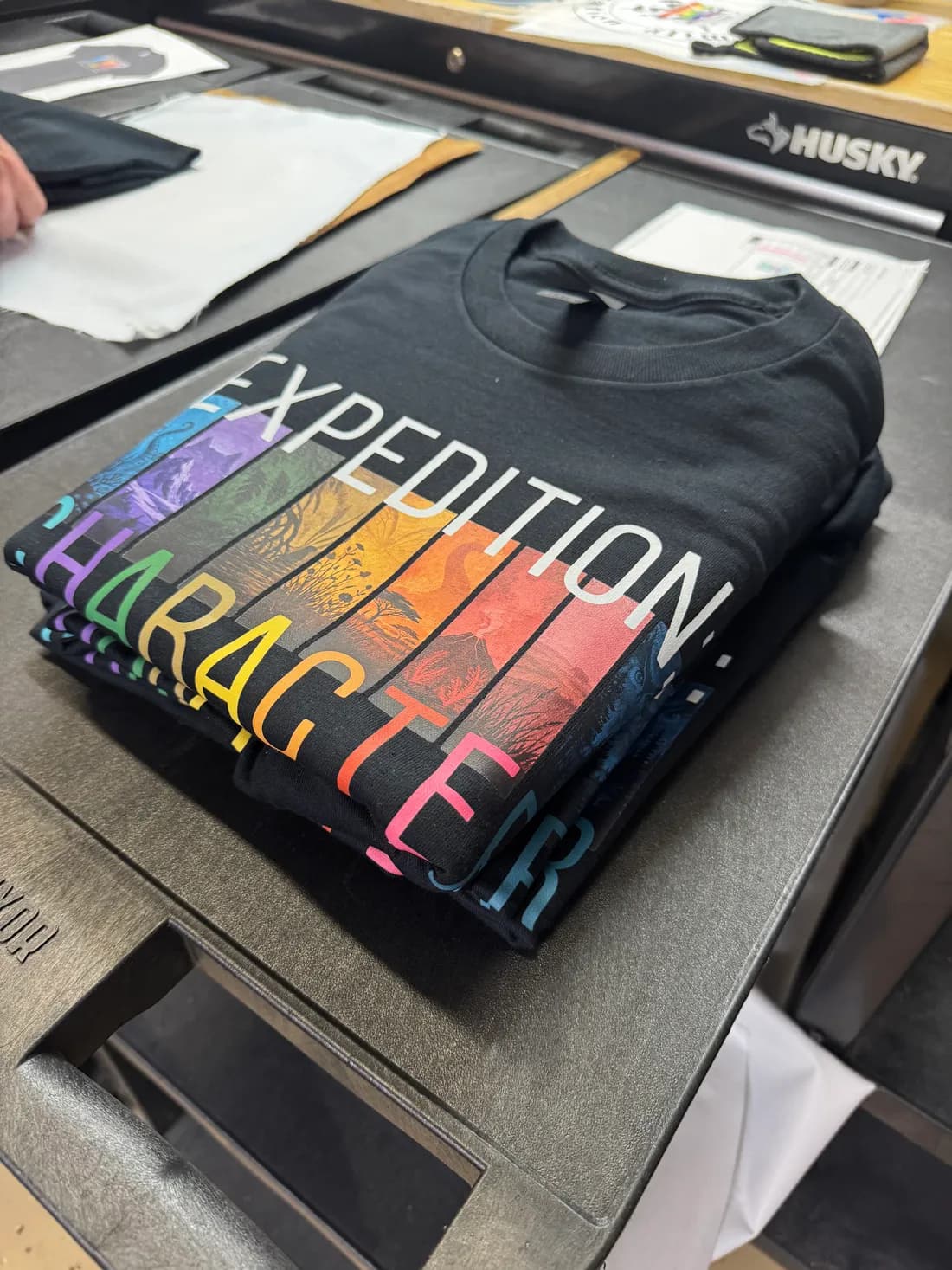
Not sure which fits your job? The full side-by-side lives in our printing methods comparison, and the DTF & DTG service page covers ordering details.
Digital printing cost questions, answered straight
Is there a minimum order for DTG or DTF printing?
No - digital printing is how we make one-off shirts make sense. A single digitally printed shirt usually lands in the neighborhood of $20-40 depending on the garment and print locations, and there's no setup fee eating the order the way screens would.
Is digital printing always cheaper than screen printing?
Only at low quantities. Once a simple design clears roughly 12-36 pieces, screen printing usually takes over on price - read our screen printing cost guide for the crossover math. Our instant quoter runs both pricing grids and quotes whichever is better automatically.
Can you match my exact brand colors digitally?
Usually very close - our printers are CMYK, and we can tune the printer's color settings to get remarkably near the intended color, even on tricky ones. True neons are the honest limit for our equipment: fluorescent colors live outside what CMYK can build (some digital printers run fluorescent ink sets - ours don't), so for those we turn to screen printing, where we mix Pantone colors with fluorescent additives.
Does DTF feel like plastic on the shirt?
There's some truth in the reputation, so here's the honest version: DTF sits on top of the fabric, and we apply it with a special sheet that noticeably reduces that feel - but a bit of hand will always be there. It's genuinely not bad, and any method feels similar when you print a large solid patch; screen printing and DTG just show it less.
Ready for your number?
Run it through the instant quoter above, or tell us the job and a real person from our Sandy shop will price it properly.