
Buying guide
Screen printing vs. DTF vs. DTG vs. embroidery: which is right for your order?
We run all four of these t-shirt printing methods in-house, every day, on the same production floor in Sandy. That means we have no reason to push you toward one - just toward the one that fits your artwork, garments, quantity, and deadline. Here's how each method works, how long it lasts, and when we'd pick it.
Reviewed by the Koala-Tees production team · Updated July 2026 · About our shop
The fast answer
- Bulk orders and repeat runs: Screen printing
- Small cotton order, photographic art: DTG
- Detailed art on mixed or poly fabrics: DTF
- Polos, hats, jackets, or a small pro logo: Embroidery
Side by side
Swipe the table sideways to compare →
| Screen Printing | DTG | DTF | Embroidery | |
|---|---|---|---|---|
| Best order size | Medium to very large | Small to medium | Small to medium | Any - singles to programs |
| Artwork & colors | Spot colors to complex art; true neons | Millions of colors, photo detail | Millions of colors, fine detail | Logos & text, up to 16 thread colors |
| Fabrics | Cotton, blends, most fabrics | 100% cotton is best | Cotton, poly, blends - most fabrics | Anything stable enough to hoop |
| Feel | Smooth ink layer on top | Softest - ink in the fibers | Thin, flexible layer | Textured, dimensional stitching |
| Durability | Excellent - decades of proof | Very good with proper care | Very good with proper care | The best - outlasts the garment |
| Cost behavior | Setup per color; cheap at volume | No setup; steady per piece | No setup; steady per piece | Digitizing once; scales by stitch count |
| Names & numbers | Not practical per piece | Easy per piece | Easy per piece | Possible - adds time per piece |
| Typical pick | Events, teams, bulk company tees | Photo art, small batches | Mixed garments, athletic wear | Polos, hats, jackets, uniforms |
Turnaround is the same conversation for every method - standard runs and rush tiers are on our turnaround times page. Not sure which method your job needs? Get a quote and we'll match it for you.
How many do you need? The quantity math
Most styles have no hard minimum - the real question is which method your quantity points to. Here's how the math lands on our floor:
1 shirt to about a dozen
Digital, almost always - DTG on cotton, DTF on everything else. No setup means a single shirt is genuinely affordable; screen printing's setup can't spread across a run this small.
Around 12-36 pieces
The crossover zone. Simple one- or two-color art starts favoring screen printing near the bottom of this range, while colorful, complex art keeps digital ahead toward the top of it.
36-50 pieces and up
Screen printing usually wins on price even for multi-color designs - and keeps getting cheaper per shirt as the run grows.
Embroidery: any quantity
Quantity barely matters here - digitizing your logo is a one-time setup, so a single polo and a uniform program both make sense.
Who picks the method? You do - we just do the math first.
By default, we quote the best-value method for your quantity, colors, and garments - you don't have to know or care which machine your shirts run on. But if you specifically want a certain method - say, real screen-printed ink on a run smaller than the usual crossover - just ask. We'll happily quote it that way; at low quantities it costs meaningfully more than digital, and we'll tell you so, but the choice is always yours. The full economics are in the screen printing cost guide.
The bulk-order workhorse
Screen Printing
Ink gets pushed through a fine mesh stencil - one screen per color - directly onto the shirt, then cured in the dryer. It lays down a thick, vibrant layer of ink that holds up wash after wash, which is why it's been the industry standard for decades.
Because each color needs its own screen, there's real setup work before the first shirt prints. That's the whole economics of the method: setup makes small runs pricey, and then every added shirt gets cheaper. Big runs are where screen printing is unbeatable - and complex, multi-color art is absolutely on the table; it just takes more screens.
Best at
- Larger runs where quantity brings the per-shirt price down
- Bold designs with a handful of solid colors
- True neons, fluorescents, and exact ink-color matches - mixed inks do what CMYK can't
- Team, event, company, and school orders that repeat
- Prints that need to survive years of wear and washing
Honest limitations
- Setup cost per color means very small runs usually make more sense on DTG or DTF
- Per-piece personalization (names, numbers) needs a different approach
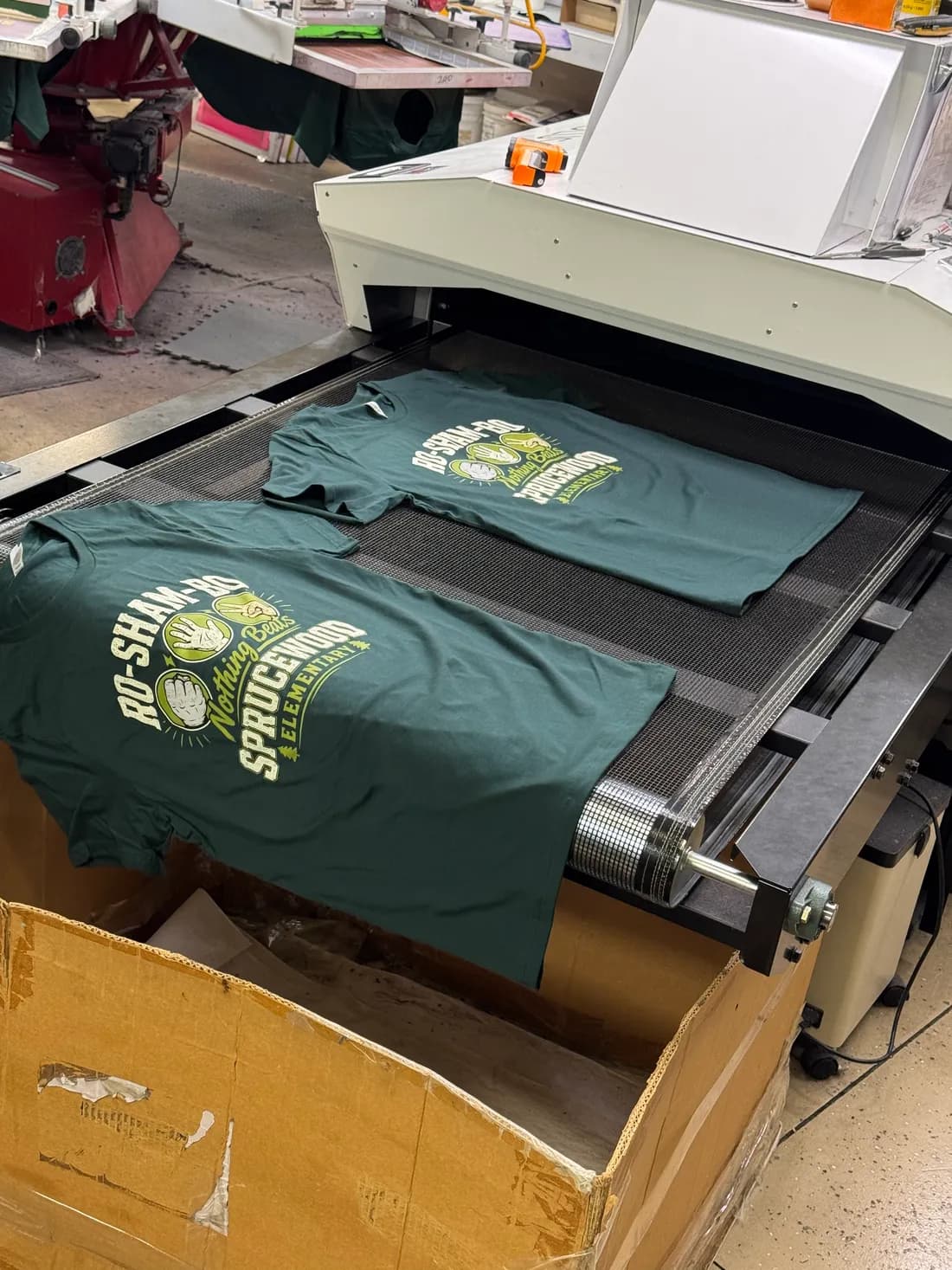
Photo-quality prints on cotton
DTG (Direct-to-Garment)
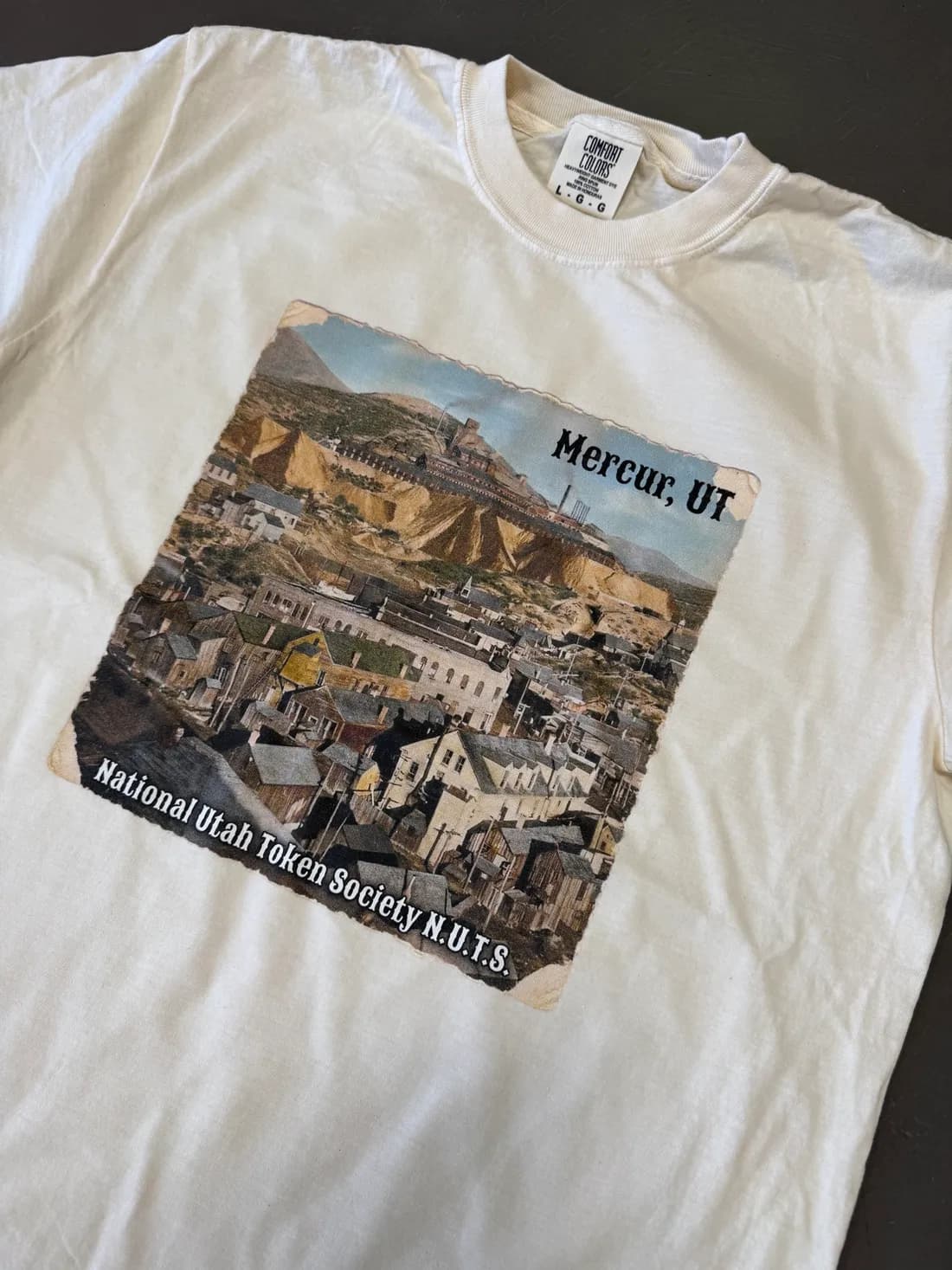
Think of a high-end inkjet printer, except the paper is a t-shirt. DTG prints the artwork straight into the fabric fibers, so photographic detail, gradients, and millions of colors all print in one pass - no screens, no setup per color.
The ink bonds best with cotton, which is why we steer DTG jobs toward 100% cotton blanks (ring-spun prints the cleanest). The hand-feel is soft - you mostly feel shirt, not ink. It's the method that makes small runs of complicated art affordable.
Best at
- Small-to-medium runs with detailed or photographic artwork
- Millions of colors and smooth gradients at no extra cost
- 100% cotton garments (ring-spun cotton prints best)
- Last-minute jobs - no screens to burn
Honest limitations
- Wants cotton - there are tricks for printing blends and we pull them off occasionally when a customer wants it, but it's trickier and usually DTF's job
- CMYK-based, so true neon and fluorescent colors are out of reach - that's screen printing territory
- On very large runs of simple art, screen printing wins on price
Full color on almost any fabric
DTF (Direct-to-Film)
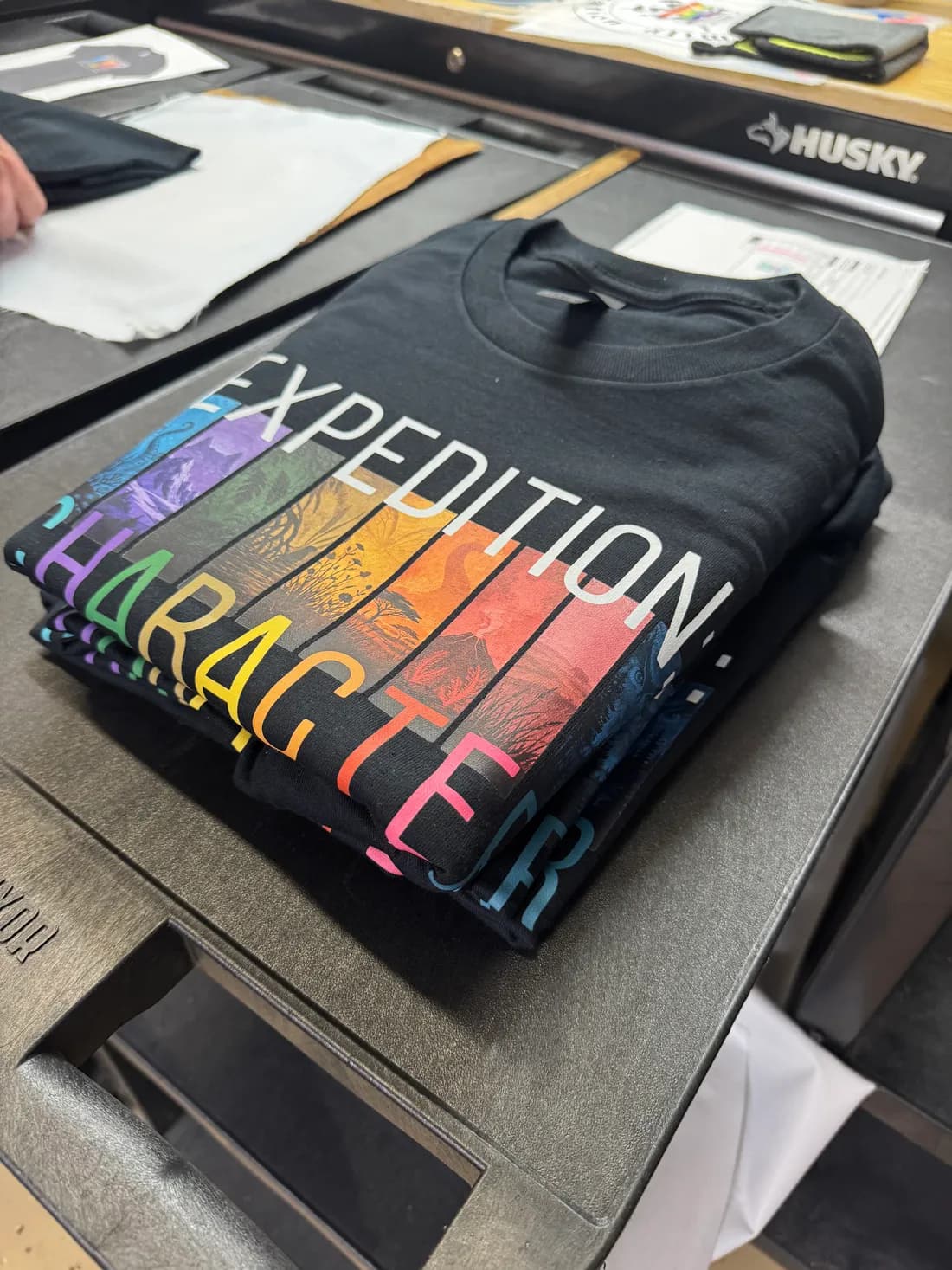
The design prints onto a special film, gets coated with adhesive powder, and is then heat-pressed onto the garment. The result: full-color, detailed artwork that bonds to cotton, polyester, blends - almost anything we can get under the press.
DTF prints are durable and stretch with the fabric, and it's become our go-to for detailed art on garments DTG can't handle - and for small-to-medium runs across mixed garment types.
The honest conversation with DTF is feel. Every method puts ink on a shirt, but DTG and screen printing embed into the fibers more, while DTF's layer sits a little more on top - screen printing purists sometimes call it plasticky, and they're not entirely wrong that you can feel it. We press ours with texture sheets to soften the hand, and it genuinely helps. Plenty of people never notice; some care a lot. If feel matters to your crowd, tell us and we'll steer you.
Best at
- Detailed, full-color art on polyester, blends, or mixed garment orders
- Small-to-medium runs without per-color setup
- Orders that mix garment types but share one design
- Stretchy and athletic fabrics
Honest limitations
- The ink layer rides more on top of the fabric - feel-aware wearers may notice (texture sheets help)
- Avoid large, unbroken patches of solid ink - at that coverage any method starts to feel like a sheet over the fabric, and DTF shows it the most. Art with breathing room (halftones, distressing, negative space) presses far softer
- CMYK-based like DTG - true neons and fluorescents are out of reach
- At high volume with simple art, screen printing still wins on price
The premium, stitched-to-last finish
Embroidery
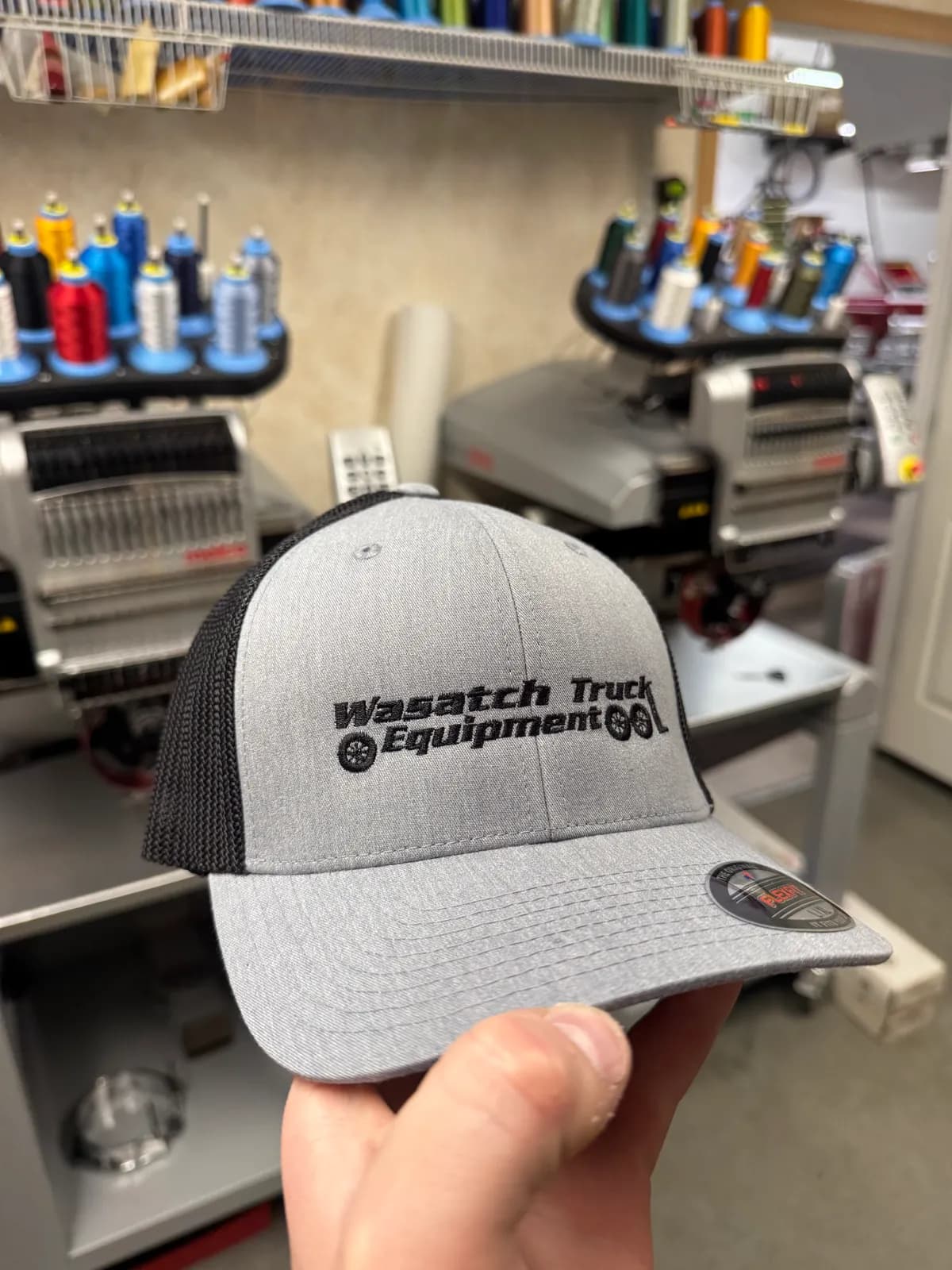
No ink at all - your logo is digitized into a stitch file and sewn into the garment in thread, up to sixteen colors at once on our 16-needle machines. The result has texture and dimension you can feel, and it reads as premium from across the room.
It's also the most durable decoration we offer: stitched logos shrug off industrial washing and years of daily wear. Cost scales with stitch count rather than color count, so compact logos are economical while huge, dense designs are not.
Best at
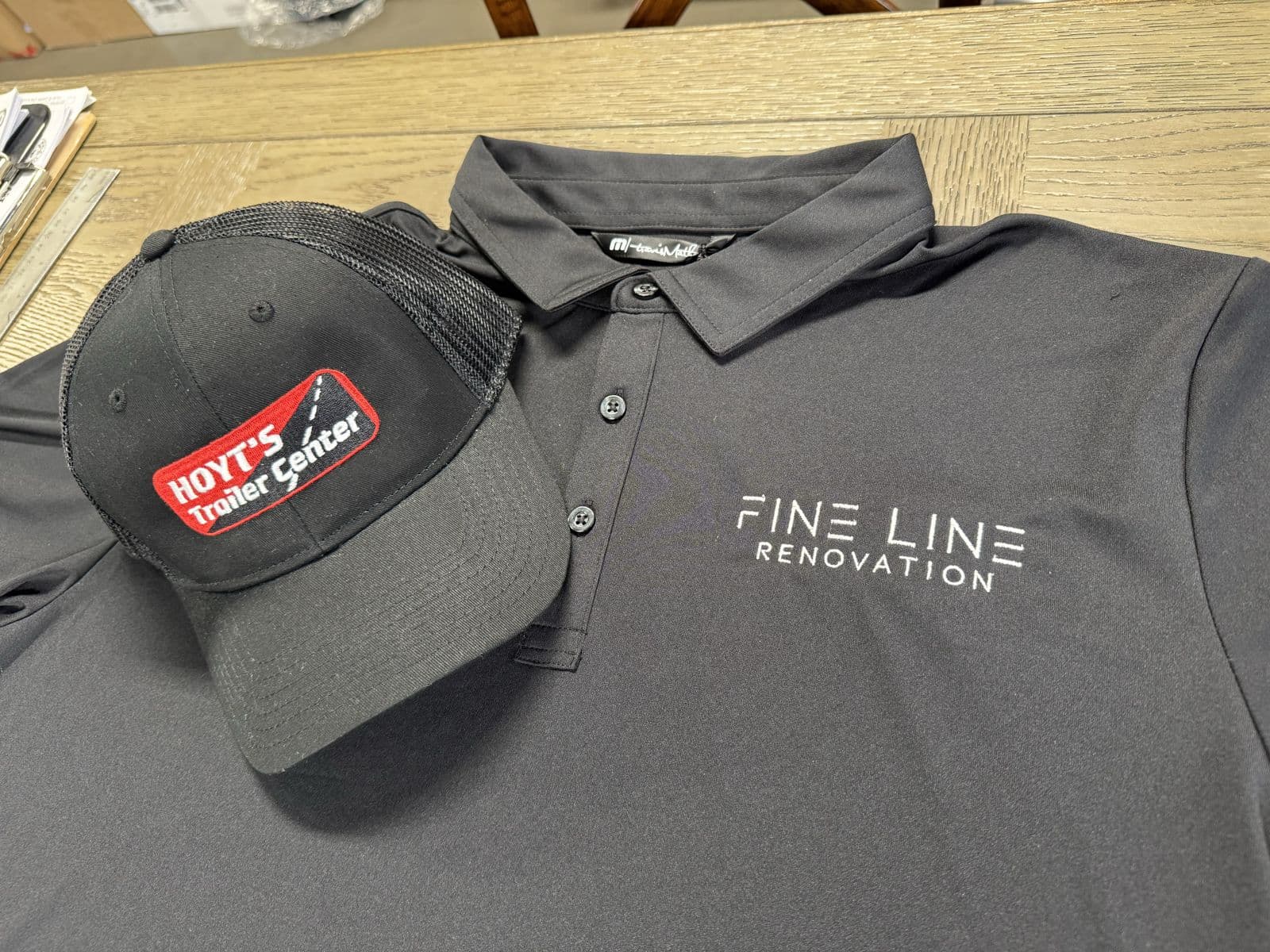
- Polos, hats, jackets, bags, and workwear
- Company logos that need a professional, premium read
- Garments that get washed hard and worn daily
- Uniform programs that reorder for years
Honest limitations
- Photos and gradients are technically possible - we've pulled them off before - but thread has physical limits, so they're rarely a good fit; very fine text struggles too
- Large, dense designs get heavy and pricey (stitch count is the cost)
Quick answers
What is the most durable t-shirt printing method?
For stitched logos, embroidery - thread outlasts everything, including industrial washing. Among prints, screen printing is the benchmark - it's the oldest method for a reason, and a properly cured print routinely outlives the shirt. That said, we have DTF and DTG shirts that have survived dozens and dozens of washes. Whatever the method, the same care buys the most life: wash gentle, inside-out, in cold water, and hang to dry. Over time any method will show wear - good care just pushes that day way out.
What is the best printing method for photos and full-color designs?
DTG on 100% cotton, or DTF when the garment is polyester, a blend, or mixed across the order. Both print millions of colors with no per-color setup - though neither does true neons; that's screen printing's territory. Screen printing can also approximate full color at volume, and embroidery isn't the right tool for photographic art at all.
What is the cheapest printing method for bulk orders?
Screen printing, almost always. The setup cost spreads across the run, so per-shirt pricing keeps dropping as quantity grows - it's why big orders have been screen printed for decades. For small runs, DTG or DTF usually wins because there's no setup at all.
Is there a minimum order for custom shirts?
Most styles have no hard minimum - we print single shirts all the time on DTG or DTF, because those methods have no setup cost. Screen printing is the one method where quantity really matters: the setup usually starts paying for itself around 12+ pieces for a simple one- or two-color design, and closer to 36+ once the art carries five or six colors. Embroidery has no meaningful minimum either - digitizing the logo is a one-time setup. (Bringing your own garments is different: contract printing has a 36-piece minimum and contract embroidery 24 pieces.)
Do I get to choose the printing method, or do you?
You do. By default we quote whichever method is the best value for your quantity, colors, and garments - most people just want great shirts at the best price. But if you specifically want a method, just ask: we'll quote screen printing below its usual crossover quantity, or digital on a bigger run, whenever that's what you want. We'll be straight with you about the price difference either way.
Should my logo be screen printed or embroidered?
It mostly depends on the garment and the job. Polos, hats, jackets, and workwear read best embroidered - premium and durable. Tees and event shirts usually call for printing. Plenty of company programs use both: embroidered polos for the office, printed tees for the crew - same logo across everything.
Can you mix decoration methods in one order?
Yes, and it's common - embroidered hats plus screen printed tees, or DTF crew shirts alongside embroidered jackets. We've even mixed methods on the same shirt: matching DTF ink colors to a screen printed design so every tee in the run could carry its own individual DTF number on top. Production runs in-house at our Sandy shop, so one order can carry your logo across methods and garments. Tell us the mix and we'll quote it as one job.
Picking the shirt itself? That's the other half of the decision - see our t-shirt brand comparison.
Tell us the job - we'll pick the method with you
Artwork, garments, quantity, deadline. We run all four methods under one roof, so the recommendation is about your order - not our equipment.